Cycle 01: Lights · Learn
Rangoli रंगोली
A pattern of color drawn on the floor by the door, to say come in. Made by hand before the guests arrive, walked around all day, swept away by morning, and made again.
The Austin Rangoli Contest
Pick your favorite design.
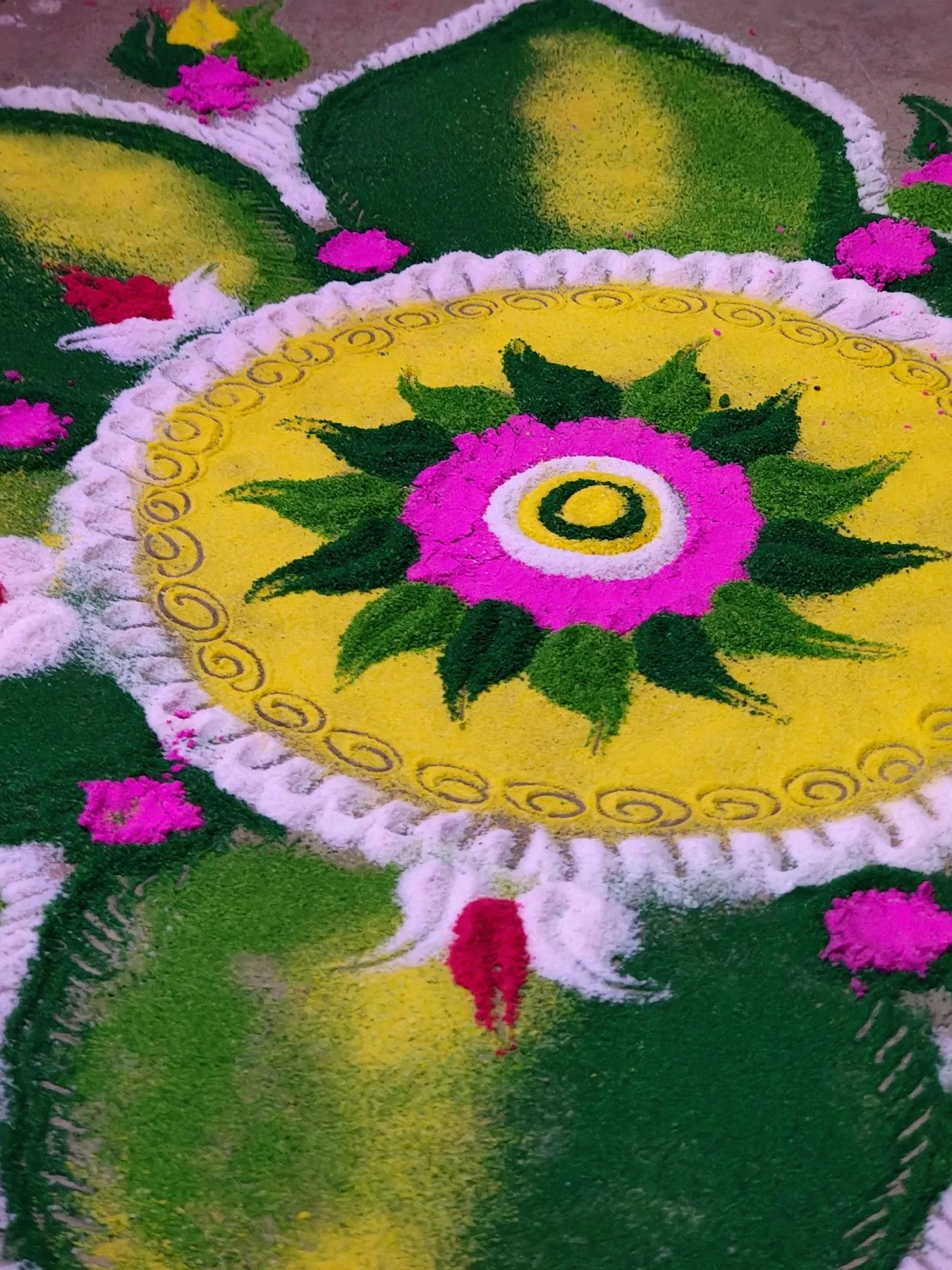
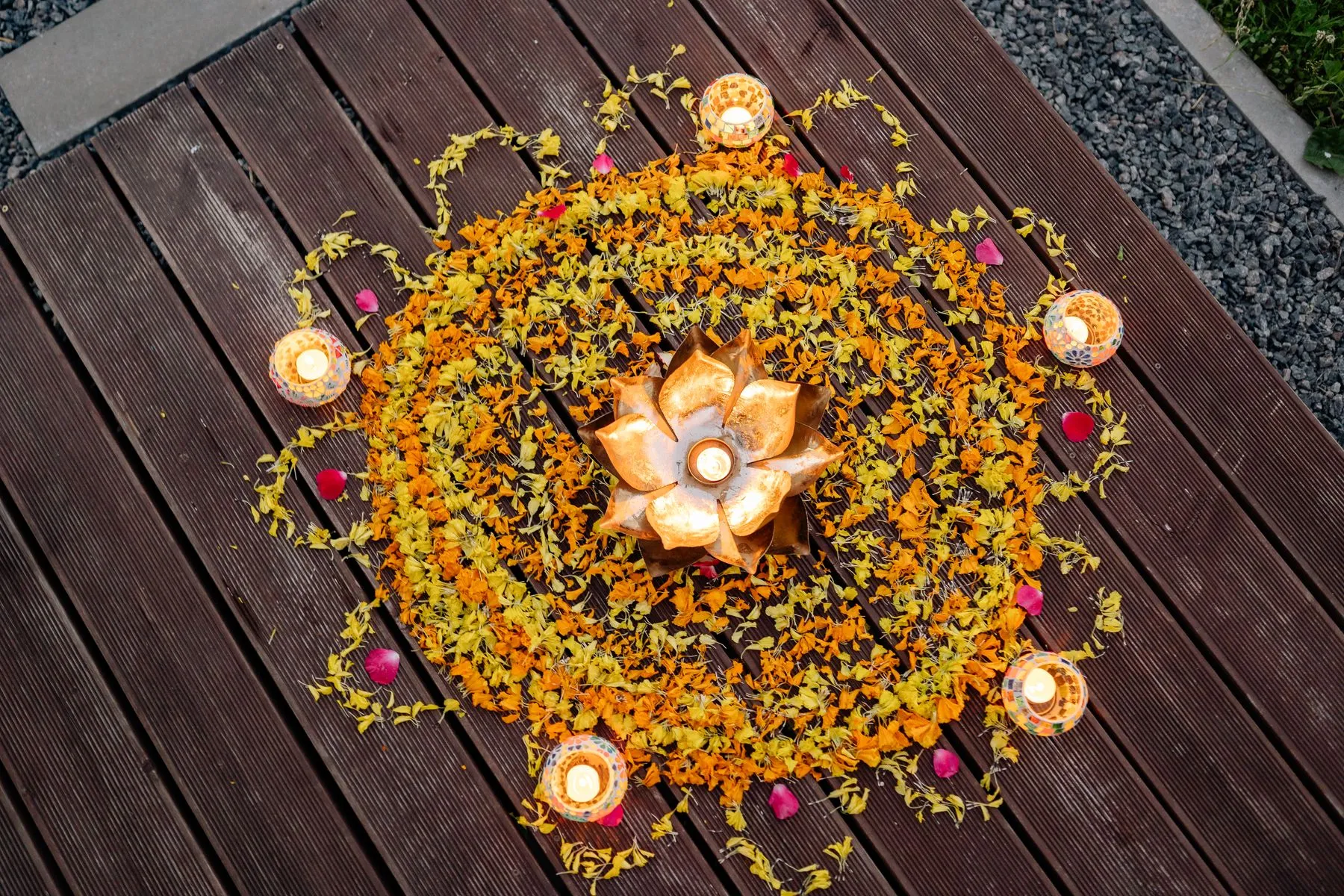
Four rangoli, drawn by hand in colored powder, petals and light. Look at each one up close, then give your single vote to the one you would stop for on your way through a door.
Voting closes Friday, November 6 at 11:59 pm, Austin time.
- One vote per person, across the whole contest.
- The count is live, so you can watch it move.
- Winners go up on the big screen on Nov 14.
- Your own email, your own code. Trust and honor policy
Connecting
The count
votes so far 0 votes so far
Every vote shows here the second it lands.
The word
rangacolor āvalīa row, a line rangolirows of color
Rangoli is drawn on the ground at the entrance of a home with rice flour, colored powder, flower petals or grains. In much of India it is a daily habit, the first thing done in the morning after the doorstep is swept and washed. At festivals, and above all at Diwali, it grows bigger, brighter and lit with lamps.
It is a welcome mat you make with your hands. For guests, for neighbors, and on Diwali night for Lakshmi, the goddess of good fortune, who is said to visit the homes that are clean, bright and ready for her.
How it is made
Dots, lines, color, light.
- 01
Dots புள்ளி · pulli
Start with a grid of dots pressed into the floor with a pinch of rice flour. They are the scaffold. Count them right and the whole design comes out even.
- 02
Lines रेखा · rekha
Loop a line around the dots, or join them up. Let the flour run from between the thumb and the first finger in one steady thread, and try not to lift your hand.
- 03
Color रंग · ranga
Fill the shapes from the center outward, so you don't risk messing up the design as you reach across. Use powders, petals, rice, lentils, whatever the house has.
- 04
Light दीप · deepa
At Diwali, set small clay lamps around the edge at dusk. The design was made to welcome someone, and now they can find the door in the dark.
What it is made of
Whatever the house has.
-
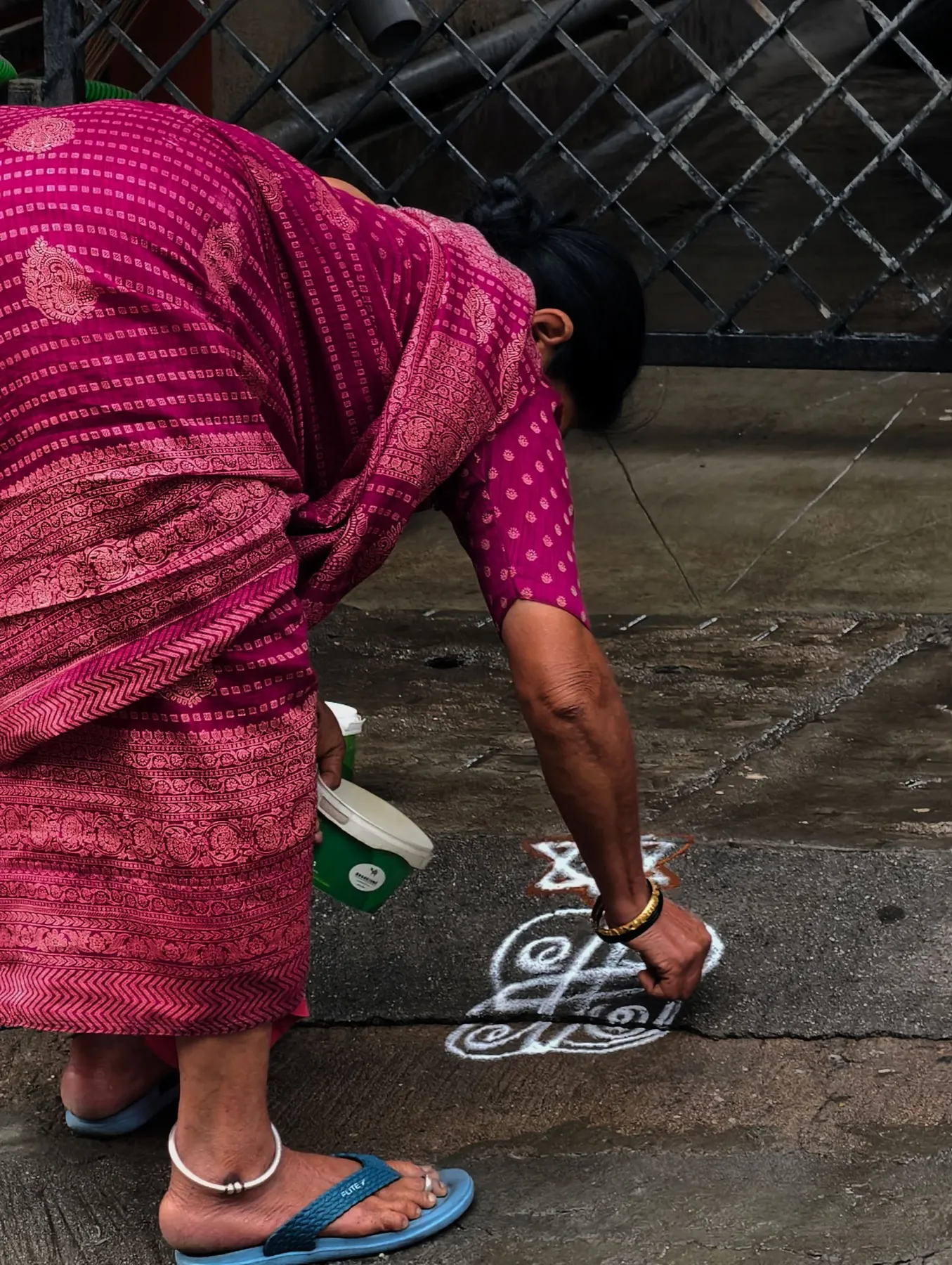 01
Rice flour
The oldest material. It is food on purpose: the ants, sparrows and squirrels eat it during the day, so the first thing the house does each morning is feed someone smaller than itself.
-
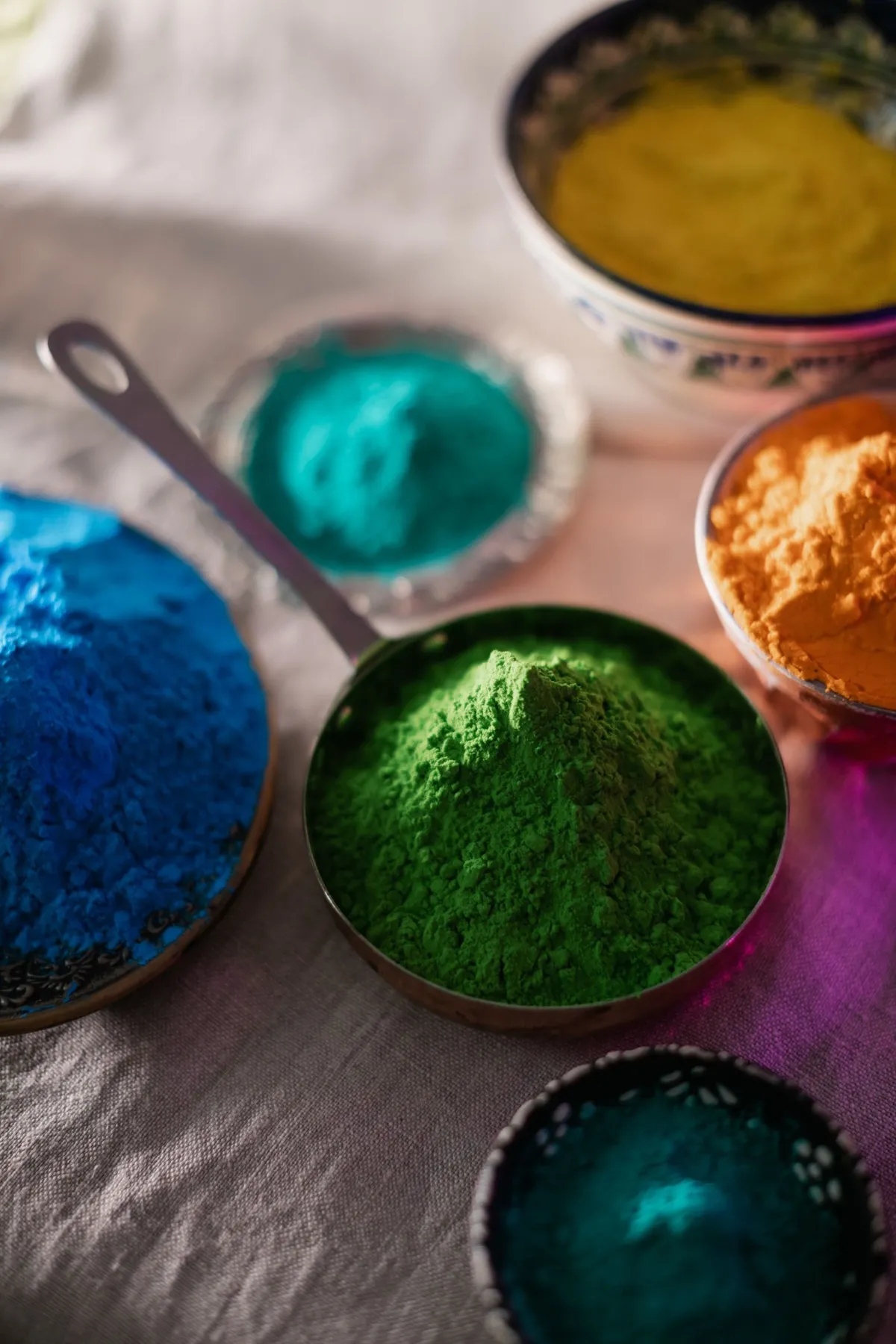 02
Colored powder
Ground stone or chalk, dyed bright. It lets you shade and blend, so most Diwali rangolis and nearly every contest entry are powder.
-
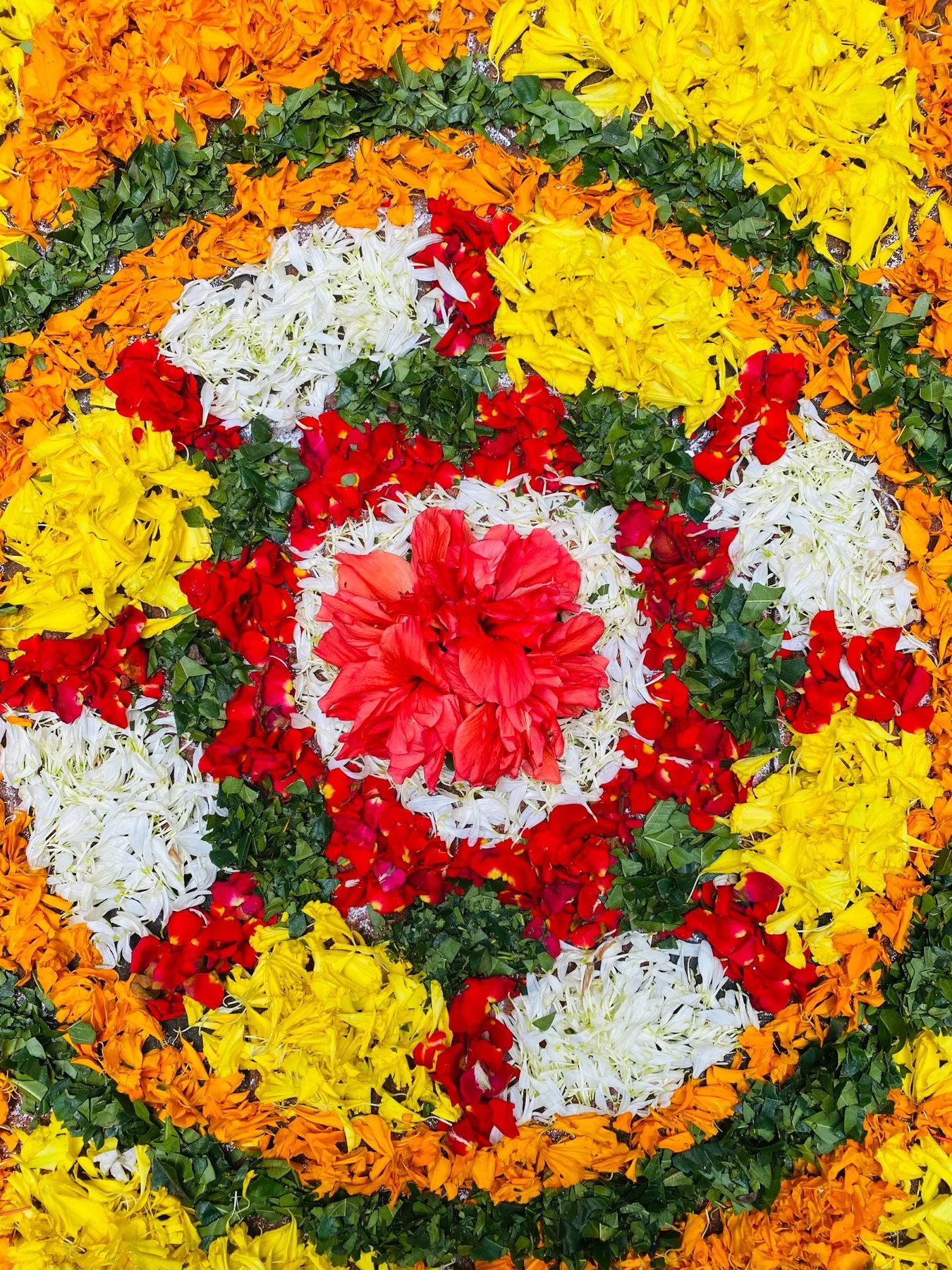 03
Flower petals
Marigold, rose, chrysanthemum and leaves torn into strips. Petals hold their shape in the wind, which is why big outdoor designs use them.
-
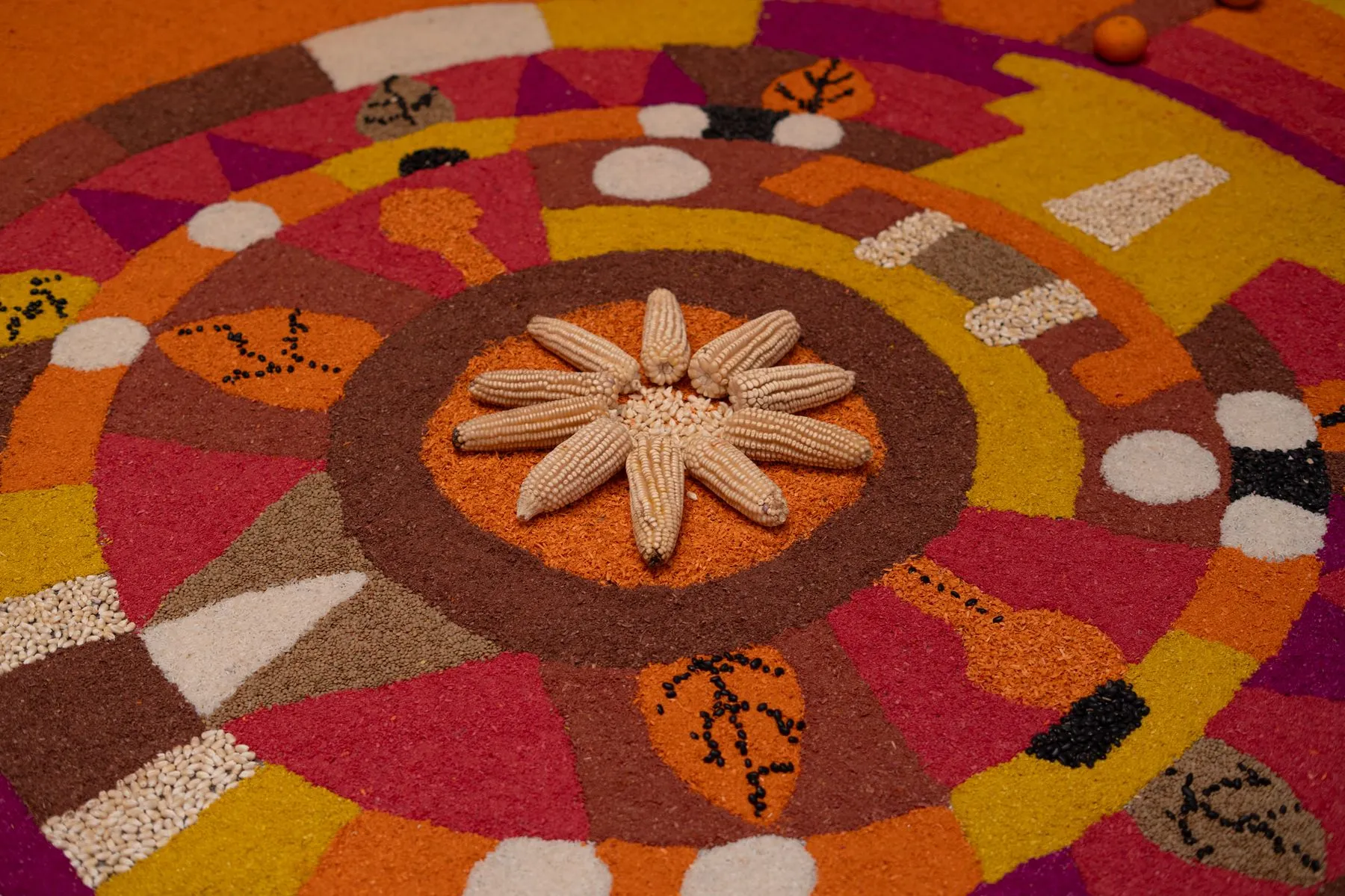 04
Grains and seeds
Rice, lentils, maize and mustard seed give texture and a quieter palette. Nothing is wasted: it goes to the birds afterward.
-
 05
Lamps
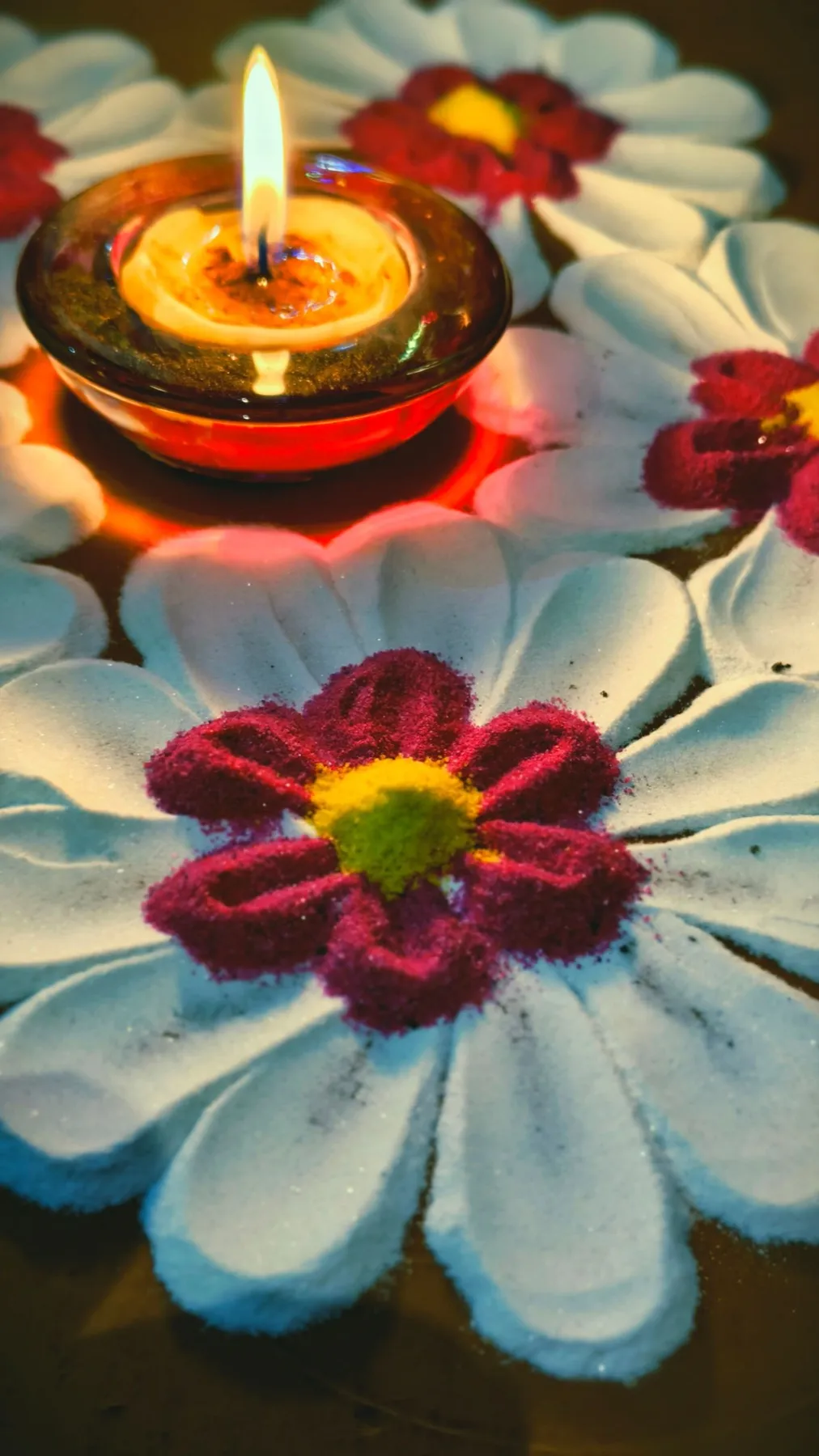
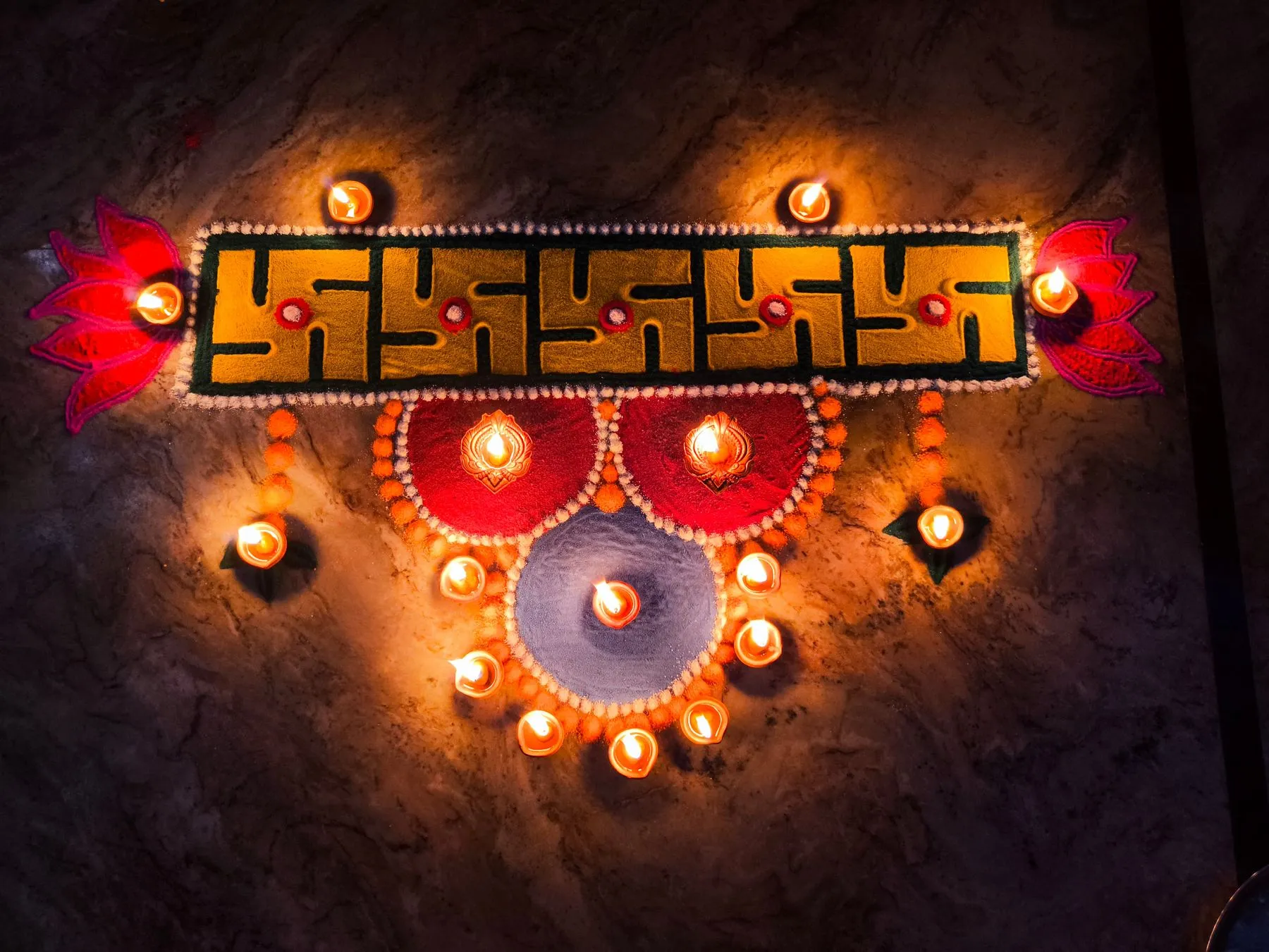
Clay diyas filled with oil or ghee and a cotton wick. Set around a rangoli at dusk, they turn a pattern into a doorway you can see from the street.
Photos: Athul karuva, Alena Darmel, Saran Indokera, Rodrigo Ortega, cros _ clicks on Pexels.
One floor, many names
Every region draws it, and every region calls it something else.
-
White rice flour lines, drawn fresh at the door before sunrise. Often one unbroken loop around the dots.
-
Big dot grids that grow across the whole front yard at Sankranti, in January.
-
The old Sanskrit form of the word. Bold colored powders inside fine white outlines.
-
Made only with flowers, a new ring every day for the ten days of Onam.
-
Painted with a wet rice paste and a fingertip, flowing vines and lotus feet for Lakshmi.
-
Rice paste on mud floors, with fish, turtles and the sun drawn for luck.
-
White chalk on a red earth wash, on floors and walls, with peacocks and tigers.
-
Red ochre ground, white rice paste lines, drawn with three fingers at once.
Why it is swept away
Made to be temporary.
Hours of work, and by the next morning it is gone. People step around it, children run through it, the wind takes the edges and the ants carry off the rice. Nobody minds. That is the point.
- At dawn
- Drawn before the day begins, so the home starts with something made with care.
- At the threshold
- Where the house meets the street. It marks the line, and invites people over it.
- For the small ones
- Rice flour feeds ants and birds. Even the floor art is a meal shared.
Questions
More about rangoli.
What is rangoli?
Rangoli is a pattern drawn on the floor, usually at the entrance of a home, with rice flour, colored powder, flower petals or grains. It is a sign of welcome and good luck, and families across India make one for Diwali and other festivals, and in many homes every single morning.
What does the word rangoli mean?
It comes from Sanskrit: ranga means color and avali means a row or a line. So rangoli is, quite literally, rows of color.
Why do people make rangoli at Diwali?
Diwali is the festival of lights, and on its main night many families welcome Lakshmi, the goddess of prosperity, into the house. The rangoli at the door, lit with small oil lamps, is the welcome mat. Some homes draw small footprints walking in to show her the way.
What is the difference between rangoli and kolam?
Kolam is the Tamil name for the same practice, and it usually means a white line design drawn with rice flour around a grid of dots, often as one continuous loop. Rangoli is the wider name used across North and West India and tends to be filled with color. Kerala makes pookalam from flowers, Bengal paints alpana with rice paste, and Rajasthan draws mandana.
What is rangoli made of?
Traditionally rice flour, because it also feeds ants and birds. Today people also use colored powder made from ground stone or chalk, flower petals, rice, lentils, sand and chalk. Lamps are added at night.
How do I vote in the Wonderful India Rangoli Contest?
Scroll to the entries on this page, tap the rangoli you like best, type your email and press Cast my vote. We email you a 6-digit code. Type it in and your vote counts. Voting stays open until 11:59pm on Friday, November 6, Austin time. The count is live, so you can watch every vote land. The winners go up on the big screen at the Festival of Lights on November 14.
Can I vote more than once?
No. Only one vote per email address, and each email gets a code to confirm it, so every vote comes from a real inbox. Share the link with your friends and family, and ask them to vote for you!
What is the trust and honor policy?
Vote with your own email address and type in the code we send you. Please never enter someone else's email or a made-up one: every code we send lands in a real person's inbox.
If three email addresses that cannot be confirmed, or three wrong codes, come from the same browser within a day, voting from that browser is blocked for 24 hours. We count by browser, not by wifi network, so people sharing a connection at school, work or the festival cannot lock each other out. After that you can vote again as normal. If you think we blocked you by mistake, write to us through the contact page.