A rangoli at the door
Rice flour and color, drawn before the house is up. By noon feet have blurred it. Tomorrow it is drawn again.
Wonderful India · Cycle 02 · Raṅga
India has always known that color changes how you feel. Our season builds to Holi, on purpose. Wear it, taste it, paint it, throw it. Then take it home and keep it.
to 5 gatherings and the festival
Indian life has always treated color as something you live with, not something you hang on a wall. A sari picked for the mood of the day. A thali that is yellow, green, red and white because a good meal should be. Haldi on the skin before a wedding, kumkum at the door, a rangoli drawn fresh every morning.
Indian aesthetics has a word for what all this does to you: rasa, the feeling a thing leaves behind. The Nāṭyaśāstra, written some two thousand years ago, even gave each feeling its own color. We think that idea belongs in the future. In how we dress on a gray Tuesday, how we cook for friends, how a neighborhood can feel like a festival.
So this season is an invitation. Come and learn it from the people who carry it. Or bring what you make, and carry it with us.
Live in it
In India color is not saved for a festival. Turn the dial through one ordinary day.
Rice flour and color, drawn before the house is up. By noon feet have blurred it. Tomorrow it is drawn again.
Where color comes from
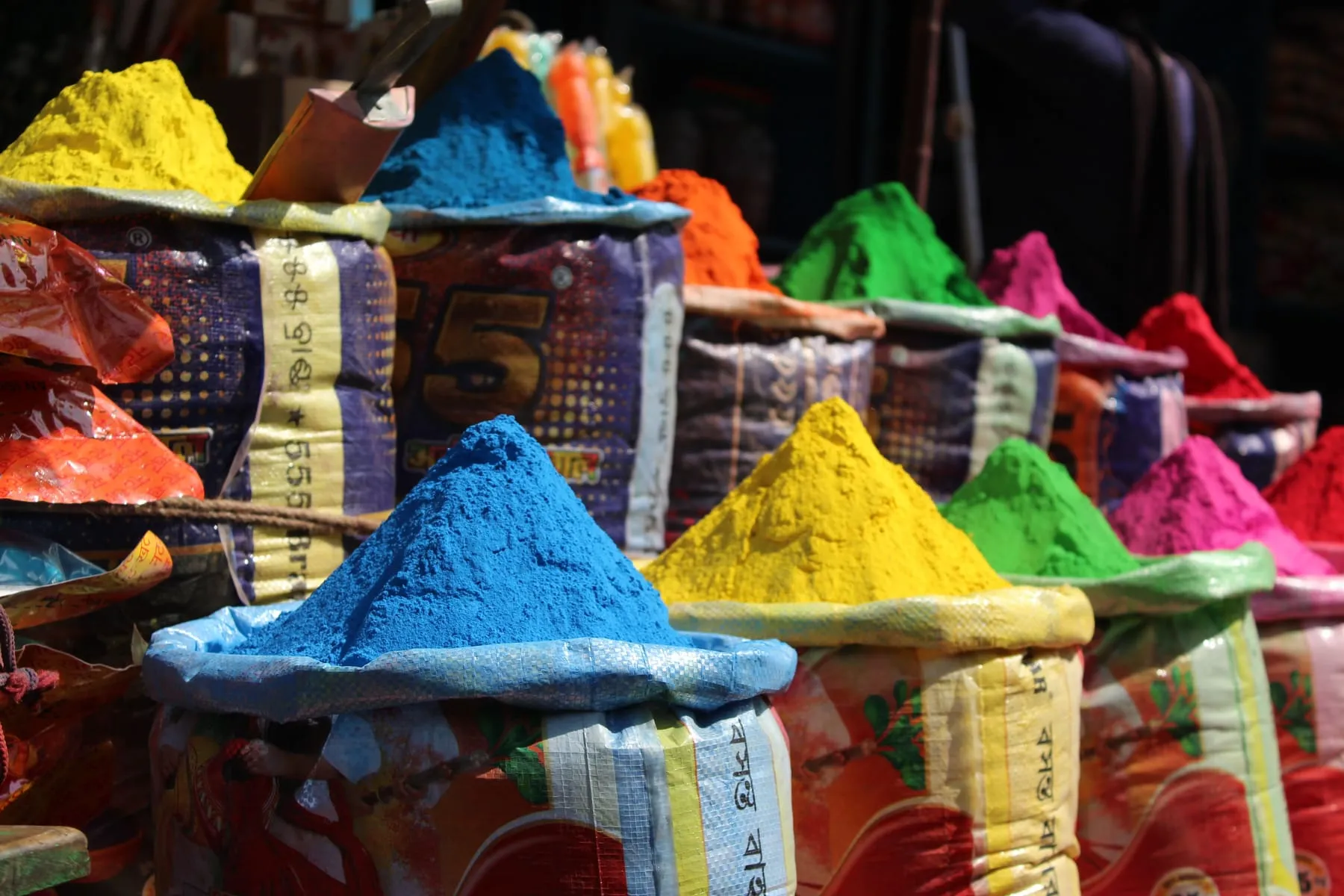
Before there were tubes of paint, every color had an address. Tap a sack, and see what it is made of.
Turmeric root
The day before an Indian wedding, family rub haldi on the bride and groom for luck and glow. At Pongal a fresh turmeric plant is tied around the neck of the pot. The yellow of beginnings.
Saffron threads
Ground with sandalwood for the tilak, stirred into the milk offered to Krishna, and the color of the bhagwa flag that flies over temples. Cooks count it by the strand.
Palash flowers
The flame of the forest blooms orange just before Holi. In Braj the petals are soaked overnight into the color Krishna is said to have thrown at Radha. It washes out, which was the point.
Vermilion
The red in a married woman’s hair parting. Hanuman is covered in it, because, the story goes, he saw Sita wearing a little for Rama and decided to wear a lot.
Turmeric and lime
Turmeric turns red when it meets slaked lime. The dot on the forehead, the welcome at the door, the mark on a new account book at Diwali.
Mehandi leaves
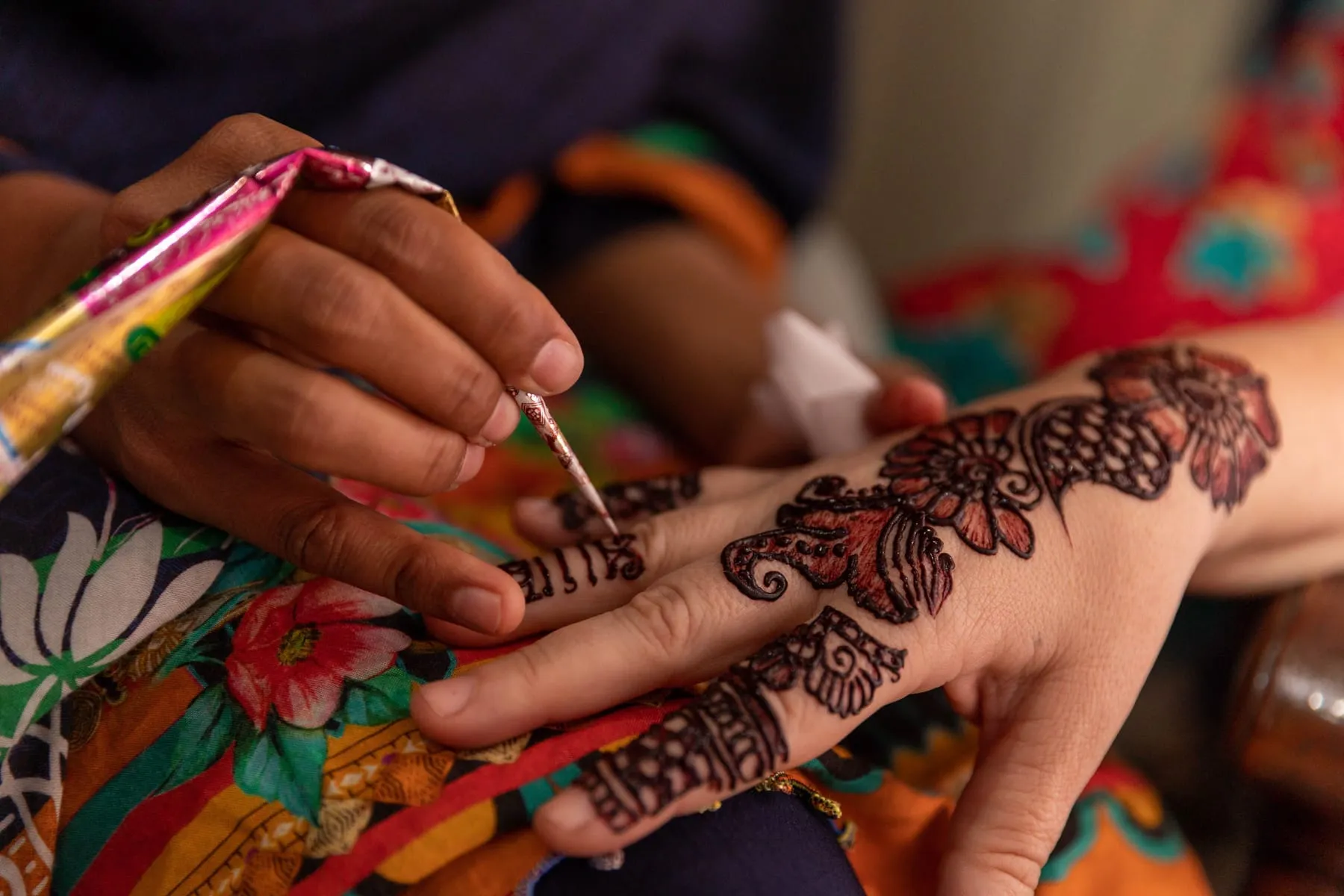
Drawn for weddings, Teej and Karva Chauth. Green in the paste, a deep red brown by morning. The darker the stain, the aunties say, the more you are loved.
Indigo leaves
Krishna and Rama are painted the blue of a monsoon cloud, and Shiva is Neelkantha, blue throated from the poison he drank to save the world. In the Bagru block printer’s yard, the same blue comes from indigo.
Red ochre earth
Dug from the ground, it dyes the robes of sannyasis, the ones who give up everything else. Village homes wash their walls and doorsteps with it before a festival.
The program
Each one follows a single Indian tradition of color. You make something with your hands, and the stalls carry the crafts that go with it.
Times, venues and tickets go up before each gathering.
Bagru and Sanganer printing Neel
· Masterclass
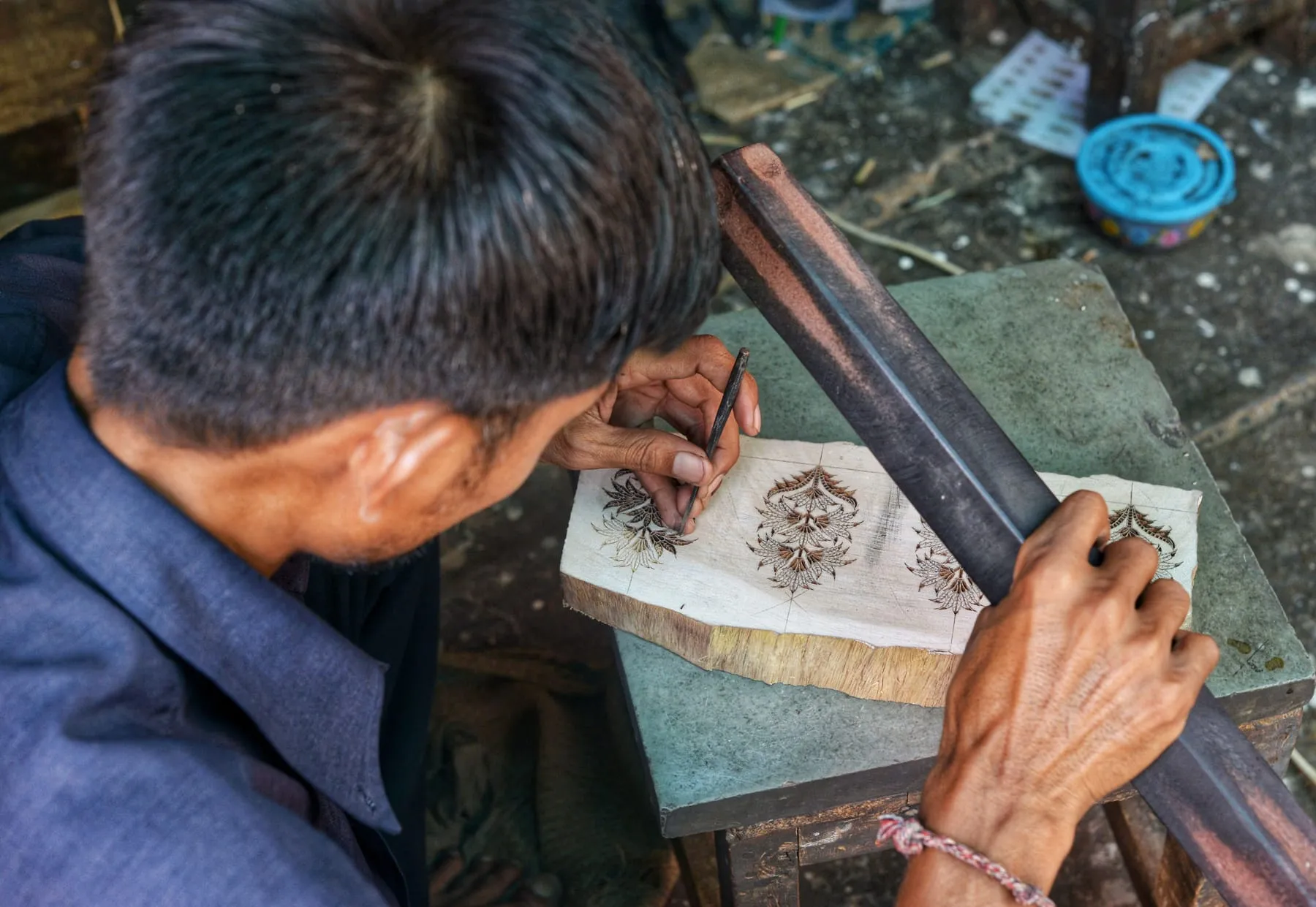
Carved wooden blocks, a table of cotton and the steady rhythm of Rajasthani hand printing.
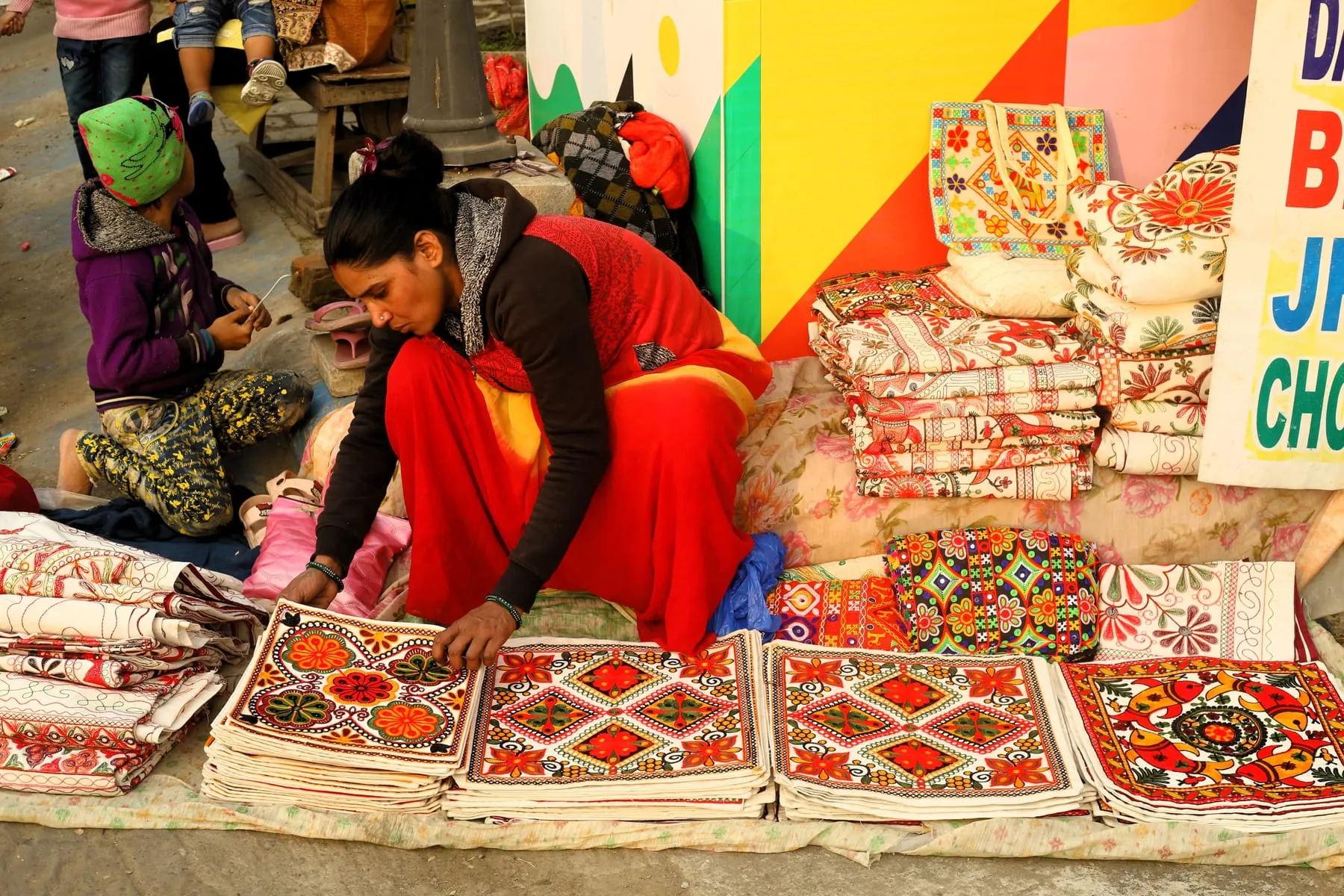
Makar Sankranti and Uttarayan Haldi
· Community gathering
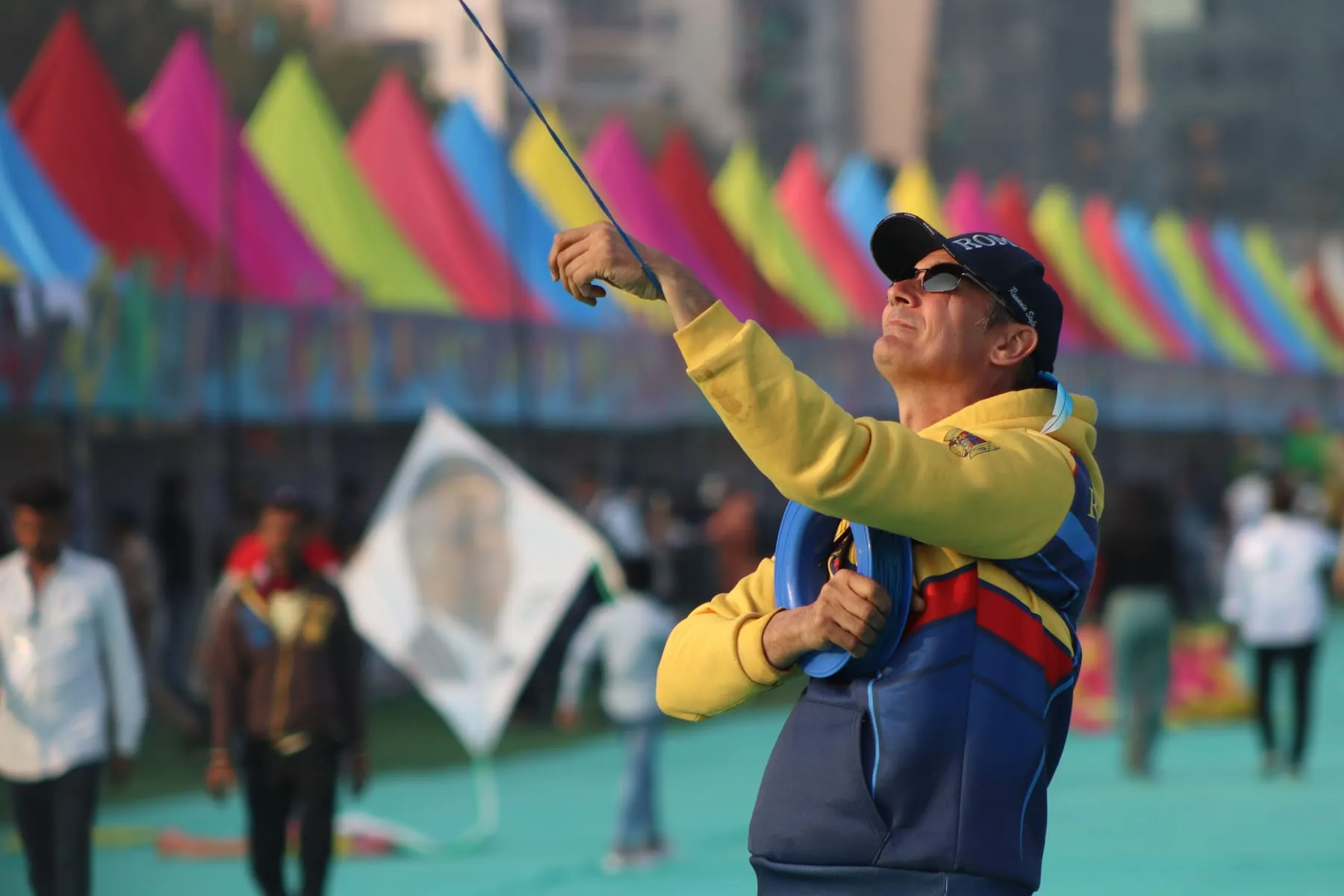
Makar Sankranti marks the turn toward longer days. We mark it the Gujarati way, with kites, sesame sweets and a lot of shouting.
Madhubani and Pattachitra Geru
· Workshop
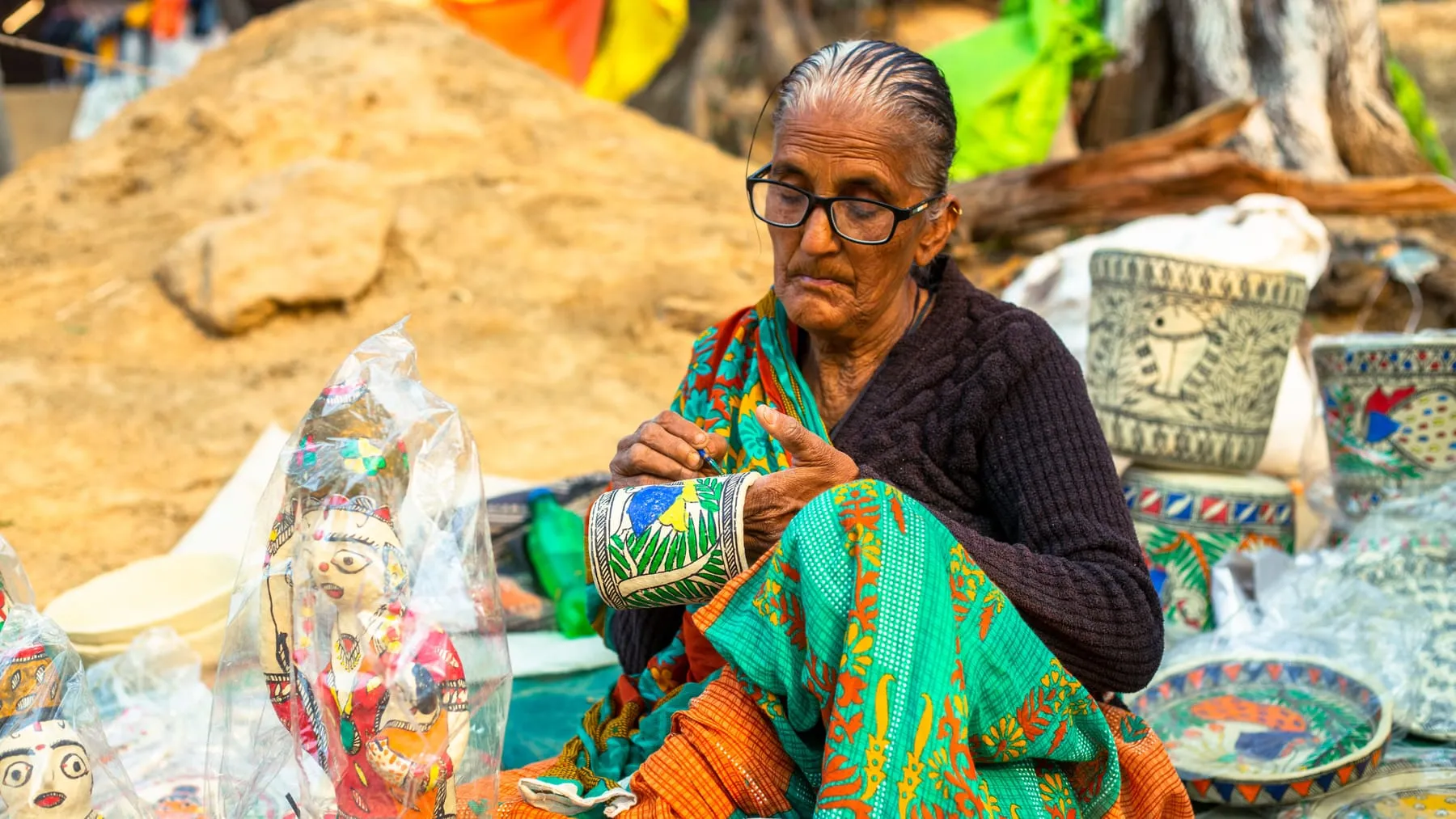
Madhubani and Pattachitra, two folk traditions that tell whole epics in line and flat color.
Phag and Hori of Braj Kumkum
· Singing circle
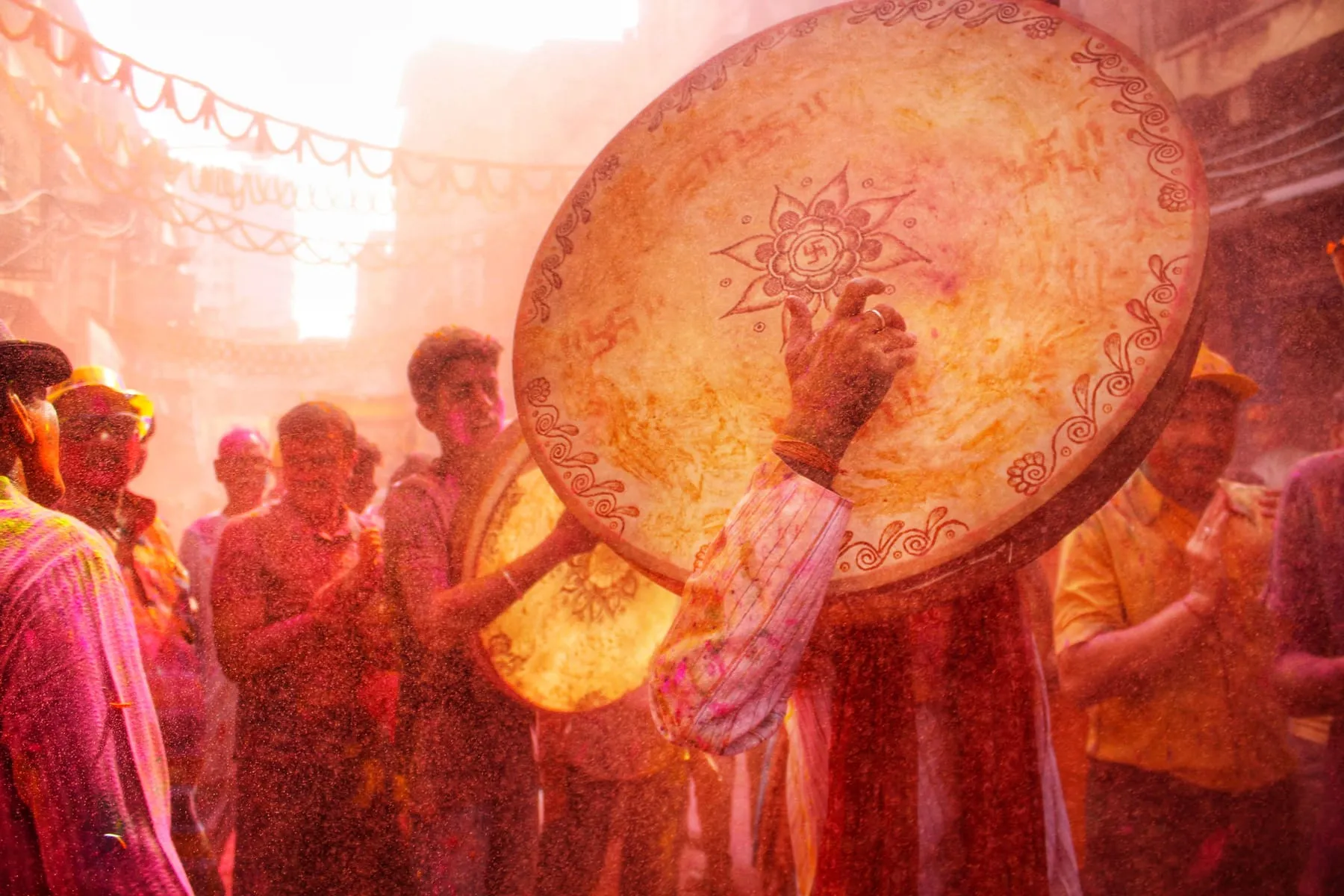
Learn the hori and phag songs sung in Braj in the weeks before Holi. No experience needed, only a voice.
Holi colors from flowers Tesu
· Workshop
Grind flowers, leaves and spices into soft, safe powder colors, then save them for the festival.
Holi and the coming of spring Kumkum
· Anchor festival
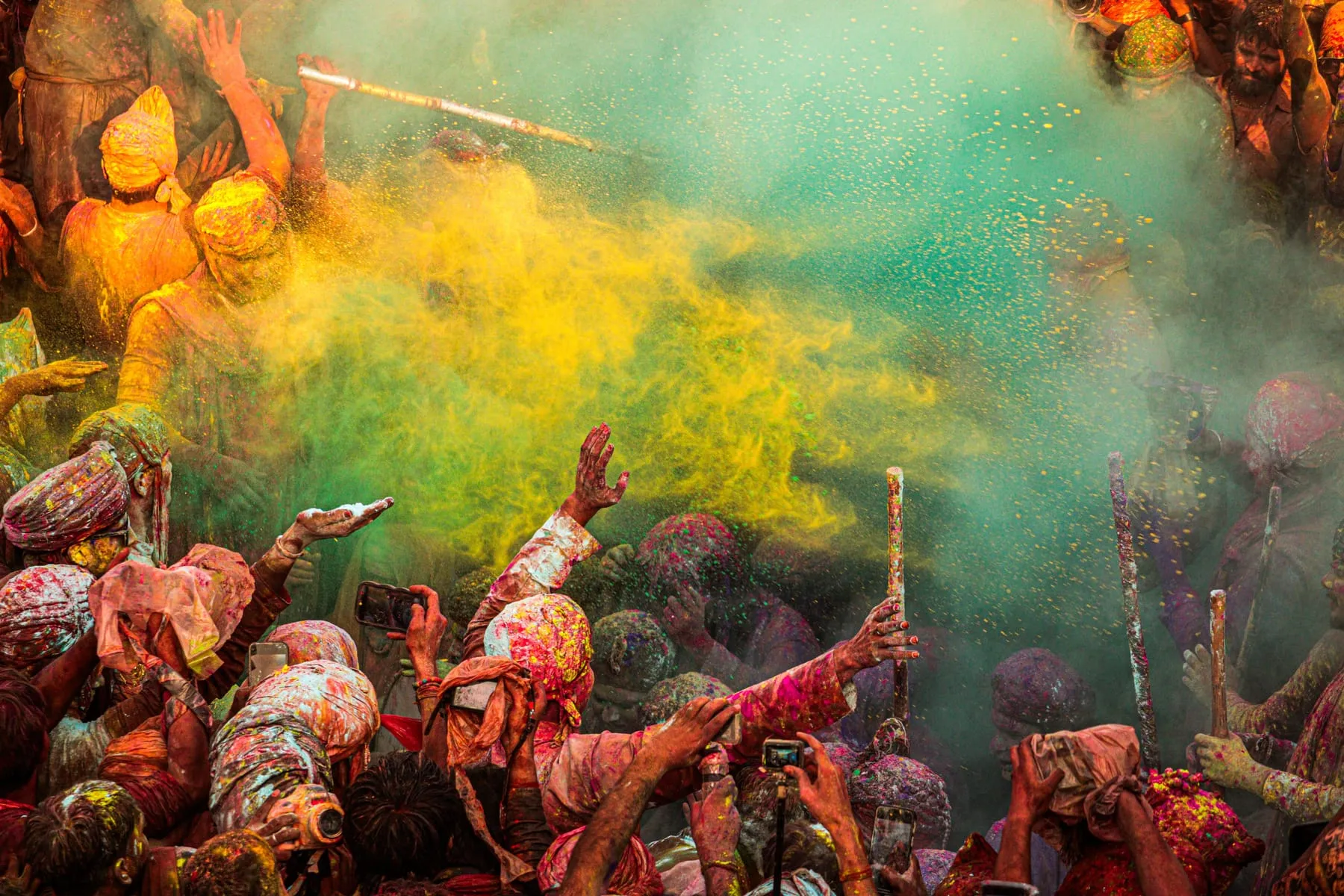
The season ends in one big spring celebration ahead of Holi: music, dance, every maker under one roof, and color for anyone who wants it.
Take part
Artists, artisans and scholars
Block printers, kite makers, Madhubani and Pattachitra painters, sari drapers, cooks, mehendi artists, dancers, singers of phag and hori. And scholars who can explain why a color means what it does. Teach, demonstrate, speak, or show and sell what you make. Tell us which gathering fits.
Apply to take partVendors
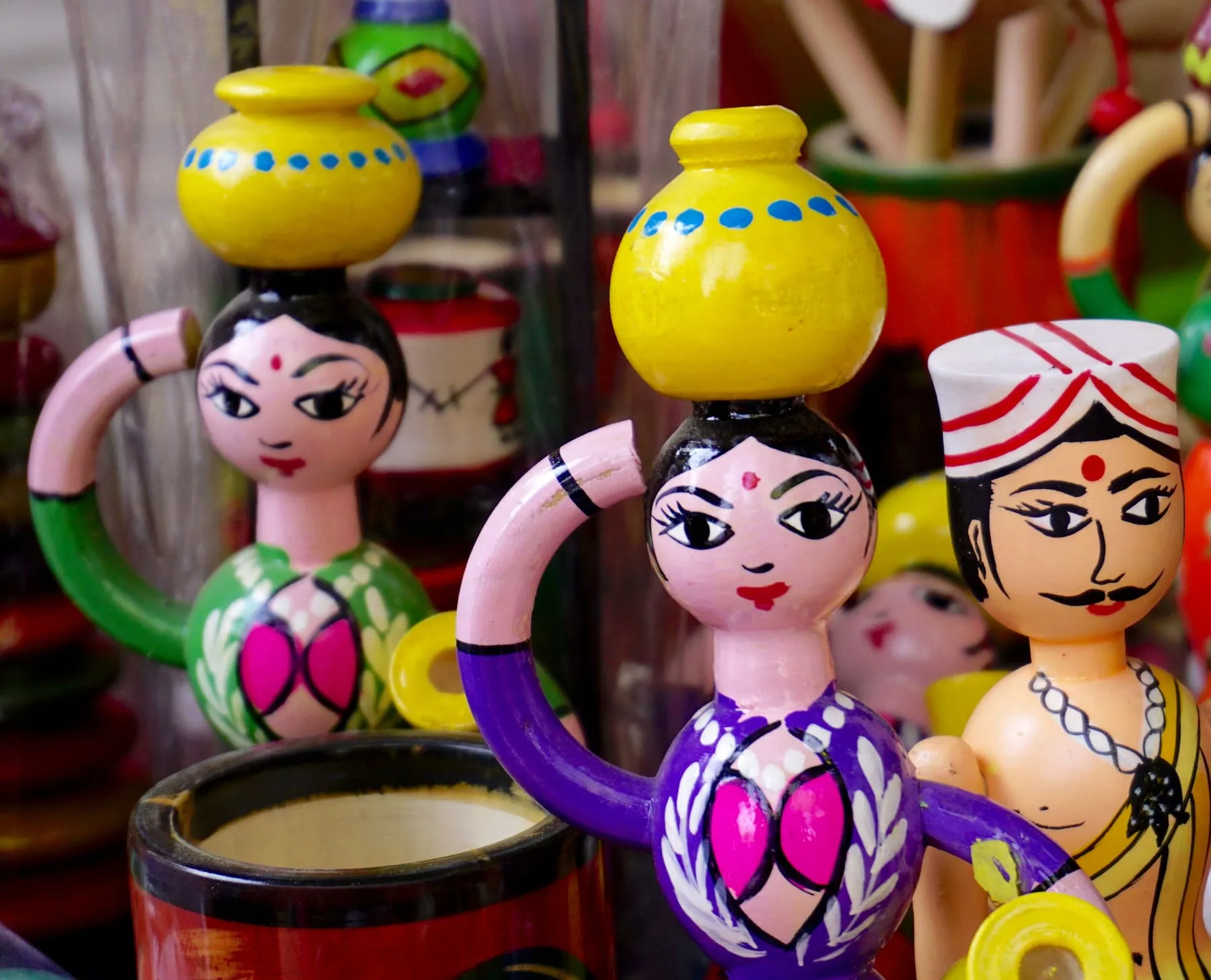
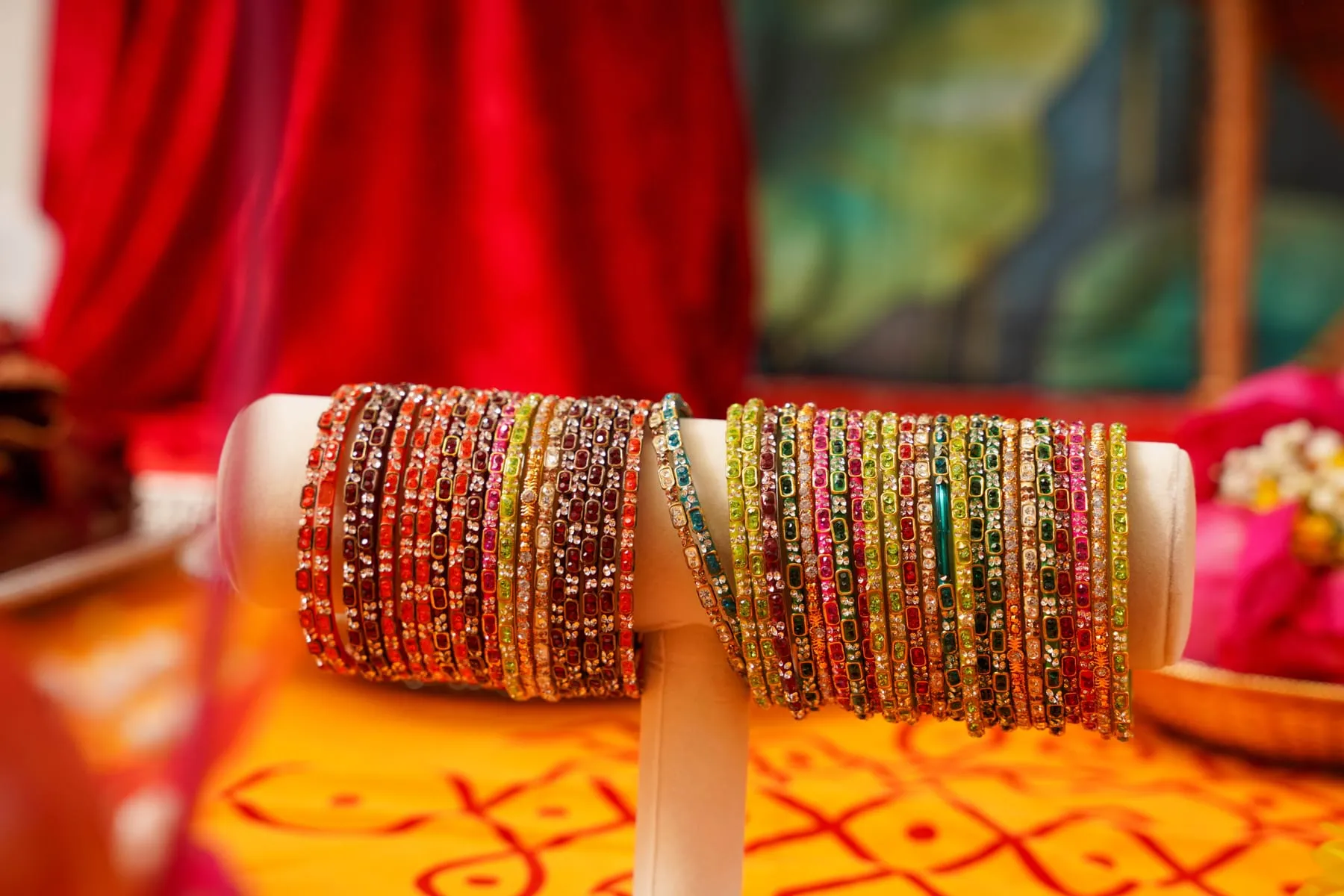
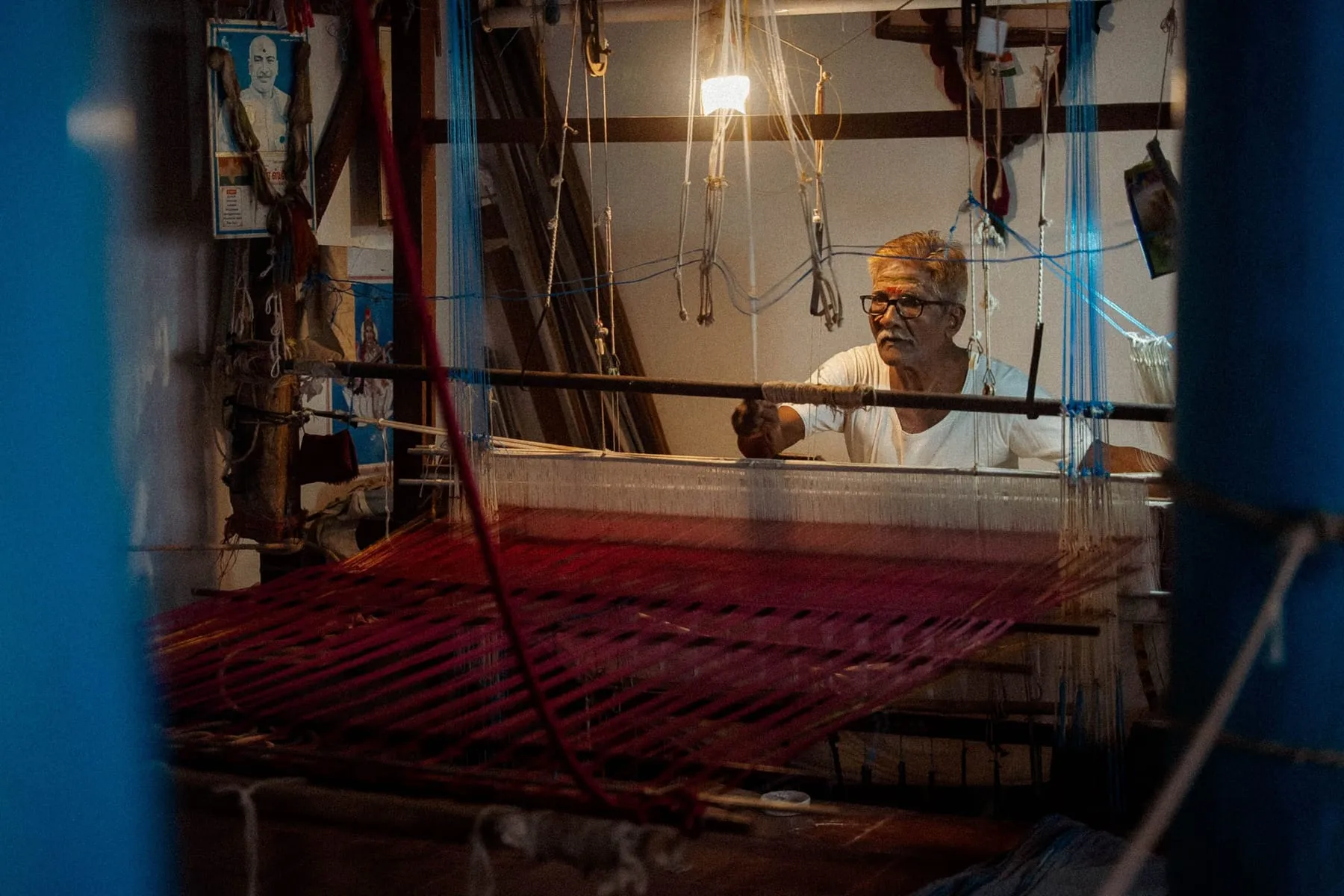
Saris and Kanjeevaram silk, block prints from Bagru, toys from Channapatna, temple jewelry, lac bangles, sweets and spices, puja goods. Pick the gathering that matches what you sell, or come to all six.
Apply for a boothAt the stalls
Watch
Holi at a temple: dry gulal, thrown on the full moon of Phalguna.
The day the rooftops of Gujarat fill up with string.
A cone, a steady wrist, a design from memory.
Bandhani starts with thread, knots and patience.
A handloom, a shuttle, and a week of work.
Haldi, mirchi and the colors of the kitchen, sold by the scoop.
Saturday, March 13, 2027
The season ends in Holi colors, one spring Saturday in the weeks before Holi itself. Every maker from the season under one roof, music and dance on stage, and an open field for anyone who wants to throw color. The powder is dry and made from plants. Nobody gets colored without saying yes.
Good to know
Still wondering? Write to wonderfulindia@artlyworld.org.
At the Festival of Colors by Wonderful India on Saturday, March 13, 2027 in Austin, Texas: dry, plant-based Holi colors, music and dance, food and stalls, open to all ages. Five gatherings lead up to it from January 10, including the Holi songs of Braj on February 28 and a workshop on March 7 where you make your own Holi colors from flowers.
The Festival of Colors is the second cycle of Wonderful India, called Raṅga, the Sanskrit word for color. It celebrates color in Indian tradition, from Makar Sankranti to Holi, through five gatherings in Austin, Texas between January 10 and March 7, 2027: block printing, kites for Makar Sankranti, Madhubani and Pattachitra painting, the phag and hori songs of Braj, and making plant-based Holi colors. It ends with the Festival of Colors on Saturday, March 13, 2027.
Indian tradition treats color as something you use, not just something you look at. Indian aesthetics calls the feeling a thing leaves in you rasa, and the Nāṭyaśāstra, an old Sanskrit text on performance, gives each feeling its own color. In daily life that becomes small habits: a bright cloth picked for the mood of the day, a plate cooked in many colors, a rangoli drawn at the door each morning, flowers on the threshold. The gatherings teach these as things you can carry into an ordinary week.
Sunday, January 10 (Block and Print), Sunday, January 17 (A Sky Full of Kites), Sunday, February 21 (Painted Stories), Sunday, February 28 (Songs of Spring), Sunday, March 7 (Make Your Own Gulal) and Saturday, March 13, 2027 (the Festival of Colors). Times and venues in Austin are posted before each one.
Yes, by design. The season is timed to Holi and Holi runs all through it: the phag and hori songs of Braj on February 28, making plant-based Holi colors on March 7, and colors thrown on March 13, in the month of Phalguna that leads to Holi itself on the full moon later in March. The gatherings before that follow color through the rest of the Indian year, from Makar Sankranti kites to Madhubani and Pattachitra painting.
Ticket details are posted for each gathering before it opens. Most evenings of the first cycle, Lights, were free to attend with an RSVP. Join the WhatsApp group or the mailing list at the foot of this page to hear first.
Yes. Vendors who bring goods from India, and makers who sell their own work, can apply for a booth. Booths are 10 by 10 foot spaces or 6 foot tables. Each gathering has its own craft, so tell us which one fits what you sell.
Block printers, kite makers, Madhubani and Pattachitra painters, sari weavers and drapers, cooks, mehendi artists, singers of phag and hori, dancers, and scholars who can tell the story behind a color can apply to teach, demonstrate, speak or show work. Applications are reviewed on a rolling basis and we reply by email, usually within two weeks.
Very. Kids can print cloth, build and fly a kite, paint, try a mehendi design and grind their own plant colors. Everything is open to all ages.
The colors at the festival are dry and plant based. On Sunday, March 7 you can make your own from tesu flowers, marigold, turmeric, beetroot and spinach. Nobody gets colored without saying yes, and old clothes are a good idea.
Quick updates
Times, venues and open calls for the Colors gatherings go to the group before they reach this page. Free to join, easy to leave.
Join the WhatsApp group ↗